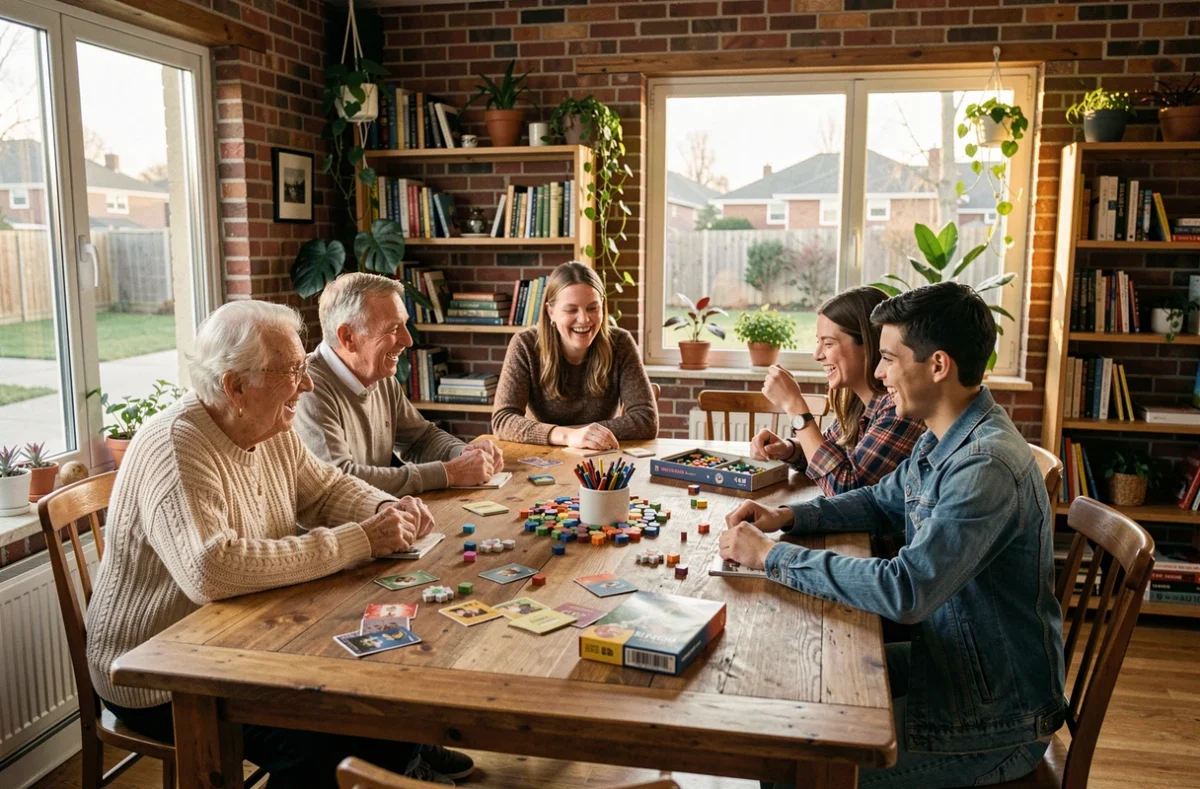
Finding an activity that everyone enjoys, from the eight-year-old cousin to the grandmother who prefers to sit, can sometimes be a puzzle. Classic outings (cinema, restaurant, bowling) end up becoming repetitive. Here are ten concrete ideas for having fun with family or friends, each chosen because it mixes ages, tastes, and energy levels.
1. Local escape room: solve puzzles as a team
France now has nearly 2,000 escape room centers spread across the country. This dense network means you probably have one within thirty minutes of your home, even outside major metropolitan areas.
The principle is simple: a team of two to six people enters a themed room and has one hour to escape by solving puzzles. The escape game works well across generations because each player brings a different logic. Children often spot visual details that adults overlook.
Platforms like sedivertir.eu allow you to quickly compare available scenarios nearby, with reviews from other players to choose the right level of difficulty.
2. Collective cooking workshop: prepare a meal with many hands
Have you ever noticed that the best meal memories are not tied to the dish itself, but to the time spent preparing it? A cooking workshop at home doesn’t require a chef. Just choose an ambitious recipe (homemade ravioli, sushi, layered cake) and divide the tasks.
Each person manages a station. The younger ones handle plating or kneading. The more experienced supervise the cooking. The result is eaten together, creating a collective pride that is hard to replicate otherwise.
3. Cooperative video game night: play together without toxic competition
The keyword here is “cooperative.” Focus on games where everyone works towards the same goal rather than duels that will frustrate the less skilled.
Titles like Overcooked (team kitchen management) or It Takes Two (two-player adventure) are designed to provoke laughter. No gaming experience is required: the controls remain simple, and teamwork compensates for clumsiness.
4. Themed photo walk: turn a mundane stroll into a creative challenge
The principle can be summed up in one sentence: each participant receives a list of five subjects to photograph during the walk (a colorful door, an animal, a reflection, an architectural detail, a stranger smiling). At the end, everyone compares results on a screen.
This format transforms a simple walk into an adventure. Children run around looking for “the right angle,” and teens finally take their noses out of their phones for creative use. No equipment is needed: a smartphone is enough.
5. Home investigation kit: play detectives without screens
Investigation kits (murder parties, mystery games) have multiplied in recent years. You receive a box containing clues, fictional testimonies, and documents to analyze. Each player embodies a character and conducts the investigation.
An investigation evening lasts between one and three hours depending on the chosen kit. The format works from age ten for family versions. Adult versions add trickier red herrings. This type of game is a great alternative to a movie when you want an active evening without leaving home.
6. Outdoor skill games tournament: mölkky, revamped pétanque, or ring toss
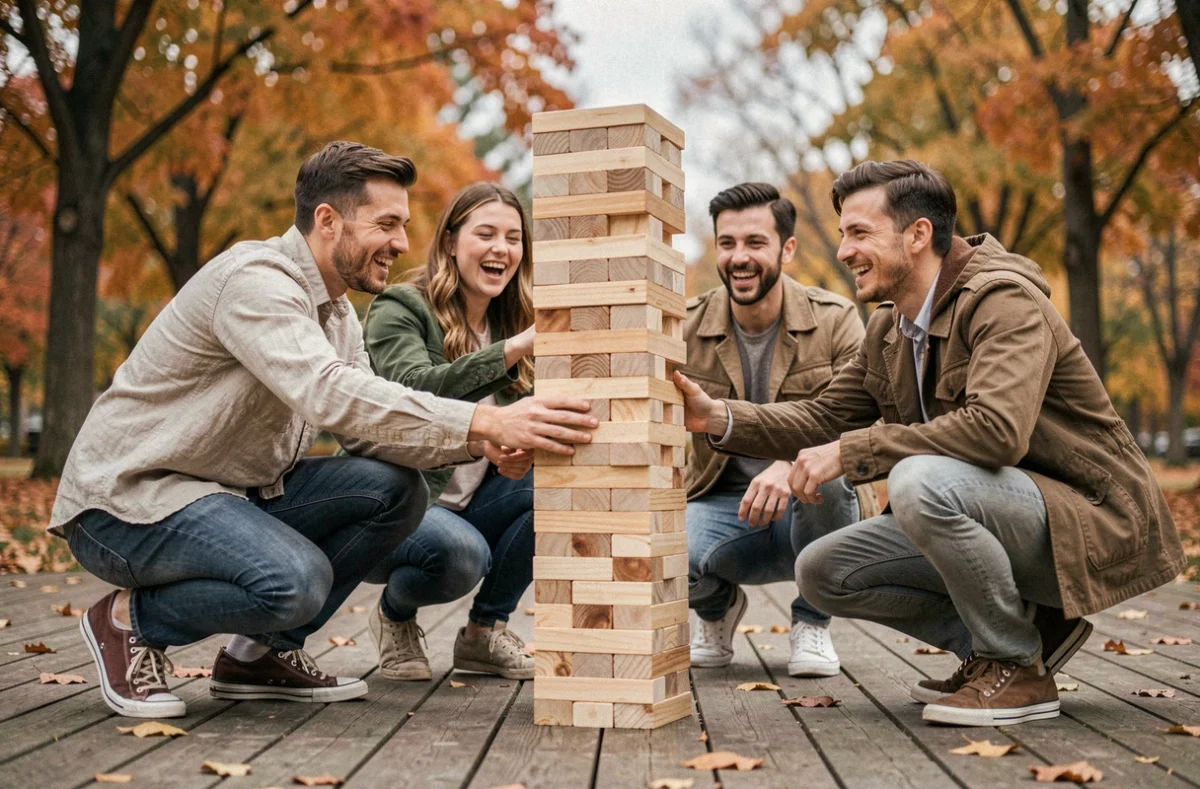
Outdoor skill games have an advantage that few activities share: they keep your hands busy without requiring physical fitness. Mölkky (numbered pins to knock down) can be learned in two minutes and creates twists until the last round.
For variety, consider ring toss games or spike ball, which require a bit more mobility. Organize a mini-tournament with mixed teams (one child + one adult) to balance skill levels without frustrating anyone.
7. Home karaoke: sing off-key together without shame
Karaoke no longer requires a dedicated machine. A Bluetooth speaker, a connected screen, and a free app are enough. The secret to a good family karaoke is the choice of songs: mix classics that grandparents know with current hits that teens master.
Why does this activity work so well? Because it reverses usual dynamics. Adults make fools of themselves, children gain confidence, and everyone laughs at the same off-key notes.
8. Collaborative creative workshop: collective mural or object customization
Hang a large sheet of kraft paper on the wall. Distribute paint, markers, and collages. Each person decorates an area. In two hours, you create a collective mural that no one could have accomplished alone.
A more useful variant: object customization. Everyone personalizes a tote bag, a white mug, or a flower pot with paint. Each participant leaves with their creation, extending the memory long after the day.
9. Indoor leisure complex: multiple activities under one roof
Indoor multi-activity complexes have rapidly professionalized in recent years, with significant growth in the sector between 2019 and 2023. Under one roof, you often find:
- Arcade and virtual reality rooms for thrill-seekers
- Pool, foosball, and relaxation areas for those who prefer a calm pace
- Obstacle courses or trampolines to expend the energy of the younger ones
This format solves a common problem: when the group hesitates between several desires, everyone can choose their activity and then meet in the same place.
10. Goal-oriented hike: geocaching or GPS treasure hunt
Geocaching involves searching for small boxes hidden in nature using GPS coordinates. Millions of caches exist in France, including in urban parks. The dedicated app is free and guides participants step by step.
The hike becomes a treasure hunt rather than a purposeless walk. Children move forward without complaining because they are looking for something. Adults discover paths they would never have taken.
Each of these ten ideas shares a common point: they create a shared activity, not a passive consumption side by side. The choice mainly depends on the group’s energy and the weather, not the budget. Most cost nothing or almost nothing, and the best evenings often arise from a simple idea thrown out at the last minute.