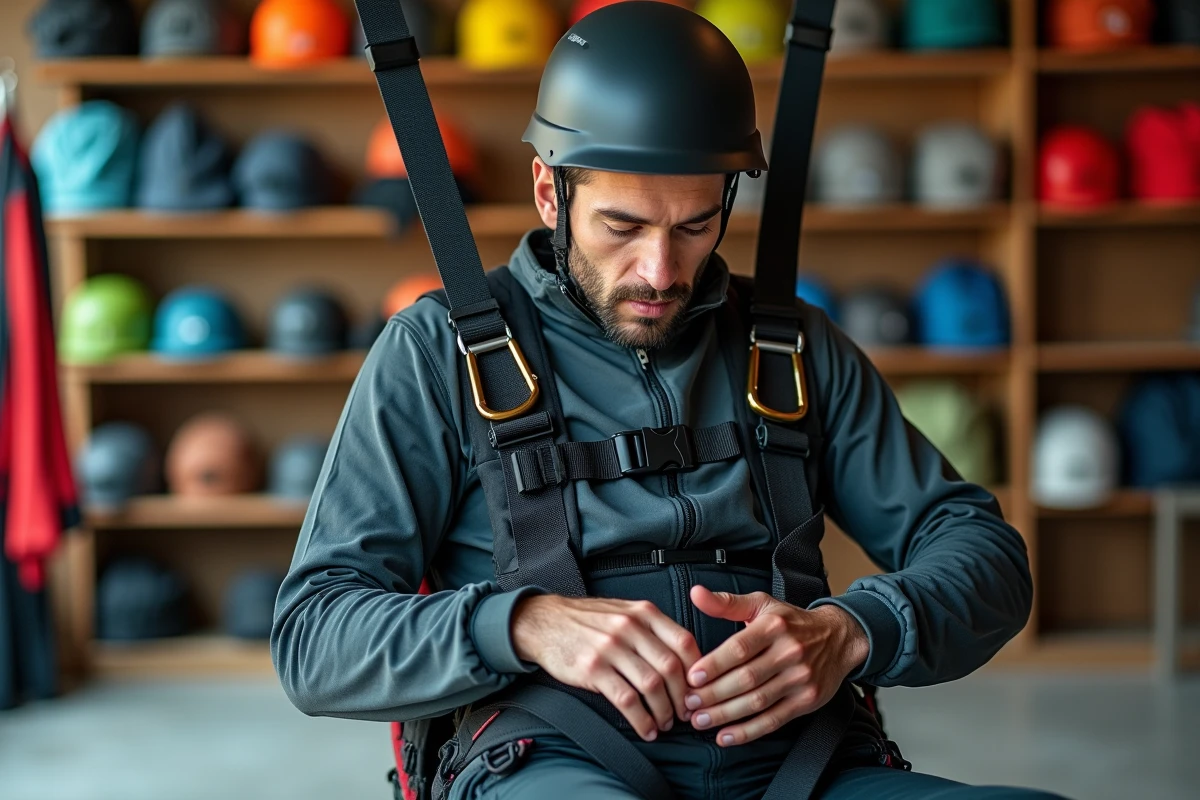
When preparing for a hike and fly outing with a backpack already loaded with food and water, every gram of harness counts, but not at the expense of back protection. This is exactly the tension that the Nervures AirTrek 2 paragliding harness seeks to resolve: to offer a lightweight reversible harness that remains reliable once in the air, even after a long ascent.
Reversible and back protection: the compromise that the AirTrek 2 addresses differently
Most reversible harnesses share a recurring flaw: after carrying, the under-seat protection ends up compressed or poorly repositioned. The FFVL has also emphasized, in its safety communications for 2023-2024, the risk of improper adjustment of airbag or foam-bag protections on this type of harness after heavy carrying.
On the AirTrek 2, Nervures integrates a fully pre-inflated protection at takeoff. Specifically, the protective foam is designed to maintain its volume even when the harness is folded in its backpack configuration. This saves time at takeoff and reduces the risk of forgetting an adjustment after the approach hike.
This system does not exempt from a visual check before each flight: ensuring that the reversible bag is correctly unfolded and that the under-seat protection regains its volume is part of the pre-flight checks, just like checking the risers. Feedback varies on the speed of re-inflation depending on temperature and ambient humidity, but the principle remains more reassuring than a traditional airbag that requires a rolling phase on the ground.
To learn everything about the Nervures AirTrek 2 paragliding harness and its detailed specifications, field experience confirms that this passive protection simplifies the trail-to-takeoff transition.

AirTrek 2 harness in hike and fly: what carrying really changes
A reversible harness is judged both on the ground and in the air. The AirTrek 2 transitions from a flight configuration to a backpack configuration without tools or complex manipulation. The key difference on a hiking route is the distribution of weight on the shoulders.
Nervures has worked on the shoulder straps and waist belt to support the weight of the folded wing and additional gear (reserve, helmet, water) without cutting into the trapezius after an hour of ascent. The back of the harness, once turned around, forms a structured backpack with direct access to storage.
Points to check before heading out for a hike and fly
- The available volume in the backpack configuration: the AirTrek 2 accepts a compacted wing and a reserve parachute, but the wing must be folded carefully to avoid straining the closures
- The length of the compression straps: on a technical trail with rocky sections, straps that are too loose shift the center of gravity and tire the back
- The state of the under-seat protection after each carry: a systematic check of the foam volume before settling in for flight avoids unpleasant surprises
These details tend to be overlooked when starting out in hike and fly, but they directly affect the comfort of the day and safety at takeoff.
Positioning of the Nervures AirTrek 2 against lightweight hiking harnesses
In recent years, specialized shops have presented the AirTrek 2 more as a versatile hiking-progression harness than as a pure ultra-light. This positioning makes sense: we are not on the same ground as a minimalist cocoon like the Supair DELIGHT 4 or Strike 2, designed to shave every gram at the expense of sitting comfort.
The AirTrek 2 targets pilots who want a harness for regular flying at sites while keeping the option to go hike and fly on weekends without buying a second set of equipment. This compromise between flight comfort and carrying lightness places it alongside models like the Supair Access Back or the Forza 2 light.
For a progressing pilot, this positioning offers a concrete advantage: one learns to fly with a stable seat and readable harness feedback, which is not always the case with ultra-light cocoons where the lying position alters the flying sensations.
Adjustments of the AirTrek 2 paragliding harness: common mistakes in flight
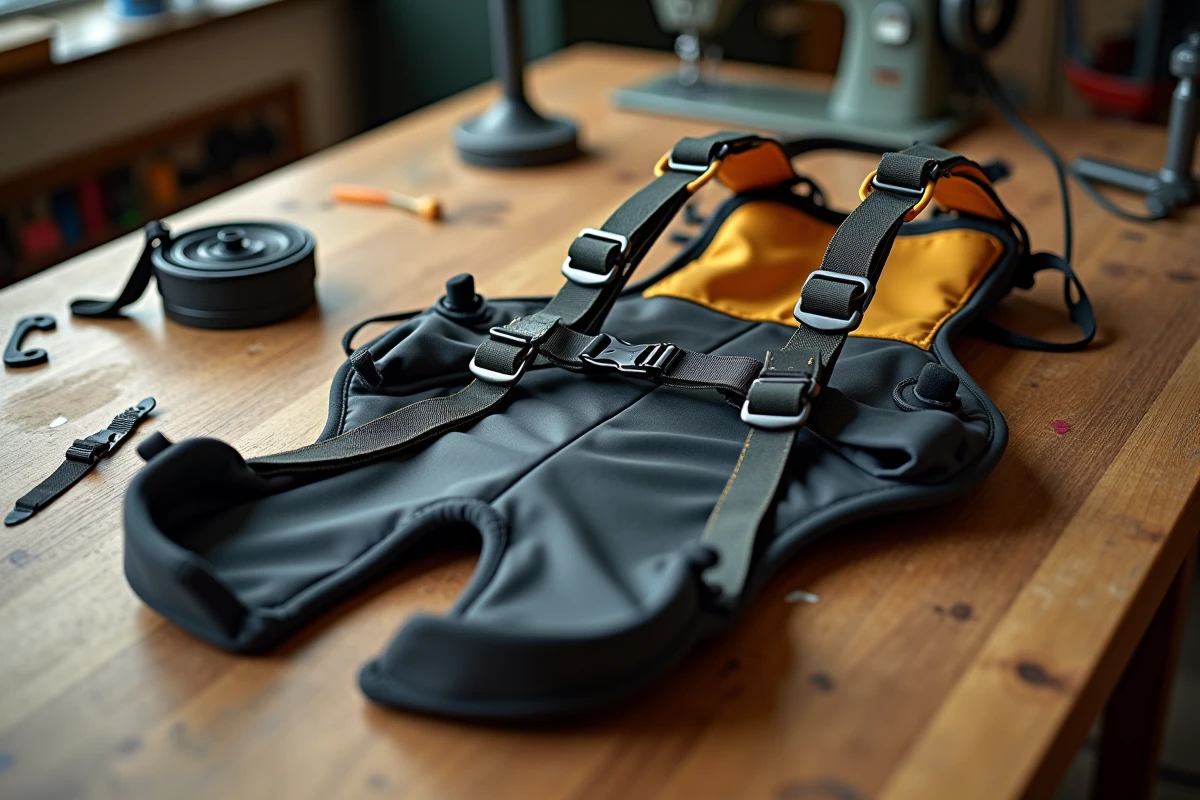
The first flight with a new harness often leads to disappointment due to improper adjustment, not a defect in the product. On the AirTrek 2, three adjustments deserve special attention.
First, the ventral strap: if too tight, it blocks weight transfer in turns. If too loose, you slide in the harness and the feedback disappears. Adjust the ventral strap so that the pelvis is supported without being compressed, with a lateral movement margin of one or two centimeters.
Next, the spreaders: their vertical position modifies the angle of the risers and thus the roll behavior. A setting that is too low brings the anchor points closer and makes the harness more reactive, which can destabilize a learning pilot.
Finally, the back plate: it defines the position of the torso in flight. A pilot who flies relaxed with a slightly inclined back will gain comfort on long thermal flights. An overly vertical adjustment tires the lower back after half an hour.
Adapting adjustments to the type of flight
In dynamic soaring at a coastal site, you tighten the ventral strap slightly to maintain responsiveness. In calm thermal flight, you loosen it a notch to enhance comfort. The AirTrek 2 accommodates these variations without the pilot needing to start from scratch, making it a versatile harness for everyday use.
The Nervures AirTrek 2 does not claim to replace a competition cocoon or a reinforced school harness. It occupies a specific niche, that of the autonomous pilot who wants a single reliable piece of equipment from trail to thermal, without sacrificing passive safety for lightness. This pragmatism explains its regular presence in the bags of mountain hike and fly practitioners.