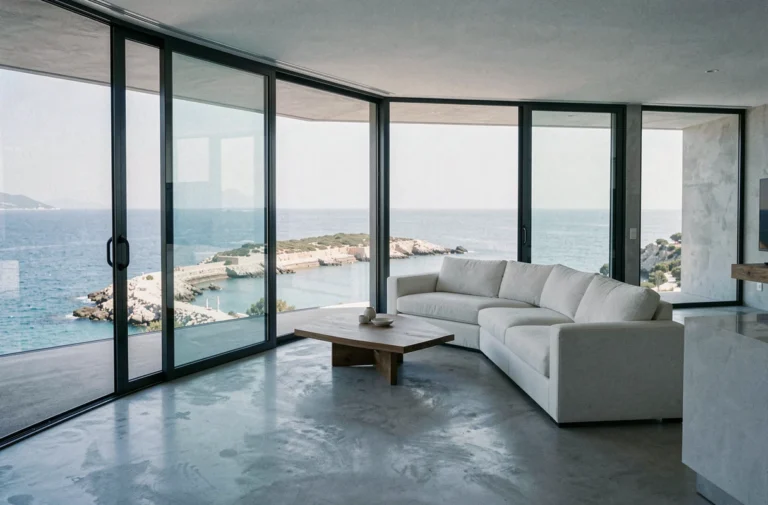
Organizing the content of a website dedicated to housing and decoration requires a choice between visual richness and navigation efficiency. The central question is measurable: what structuring criteria produce a smooth user journey without sacrificing editorial depth? Two recent analytical frameworks, one regulatory (European Accessibility Act), the other recommended (RGESN 2024), provide concrete benchmarks to arbitrate these choices.
Accessibility and Eco-design: Two Frameworks for Structuring a Housing Site
| Criterion | European Accessibility Act (EAA) | RGESN 2024 |
|---|---|---|
| Status | Mandatory for B2C e-commerce since June 28, 2025 | Recommended for the private sector |
| Scope | Ordering process, product filters, keyboard navigation, screen reader | Complete life cycle of the digital service (design, hosting, content) |
| Impact on Content | Descriptive alternative texts for product images, coherent heading hierarchy | Limiting superfluous media, pages that respond quickly to visitor needs |
| Exemption | Some microenterprises | No direct legal obligation |
This table reveals a point of convergence: both frameworks encourage distinguishing content that aids decision-making from purely decorative content. A housing site that applies these two frameworks simultaneously produces a lighter and more readable architecture.
On the sitemap page of Salon Tendances Habitat, this logic of hierarchy is visible: the main sections are identifiable without visual overload, facilitating both indexing by search engines and human navigation.

Product Images and Mood Images: A Distinct Editorial Treatment on a Decoration Site
The classic temptation of a housing site is to multiply mood visuals to create an atmosphere. This approach directly conflicts with accessibility and eco-design requirements.
Alternative Text: Two Logics Based on the Function of the Image
A product image (a light fixture, a flooring, a door handle) serves a decision-aiding function. Its alternative text must describe the product itself: material, color, perceptible dimensions. Simply writing the file name or leaving the field empty excludes visitors using a screen reader.
A mood image without useful information must be marked as decorative to avoid cluttering assisted navigation. In HTML, this means an empty alt attribute. The distinction seems simple, but it structures the entire visual editorial policy of the site.
- Product image: descriptive alt required (e.g., “Sage green velvet armchair, oak legs”)
- Mood image: empty alt, purely aesthetic role on the page
- Contextual image: alt describing the context if it adds information (e.g., “Living room with exposed stone wall and indirect lighting”)
This systematic sorting reduces noise for assistive technologies while maintaining the visual richness expected in the interior decoration sector.
Taxonomy and Structure: Organizing Pages by Search Intent
Most competing sites in the housing field structure their content by room type (living room, bedroom, kitchen) or by product category. Organizing by search intent produces a more effective structure in terms of natural referencing.
A visitor typing “how to choose a quartz countertop” has different expectations than a visitor searching for “quartz countertop price.” The former expects a comparative guide, while the latter seeks a product page or a configurator.
Three Levels of Pages to Distinguish
- Transactional pages: product sheets, category pages with filters, configurators. They concentrate technical descriptions and product visuals with descriptive alt
- Informational pages: guides, blog articles, tutorials. They capture search traffic ahead of the purchase and build the site’s thematic authority
- Navigation pages: the homepage, sitemap, parent category pages. Their role is to distribute internal linking to the first two types
Each page should serve only one main intent. Mixing a buying guide and a product sheet on the same URL dilutes the signal sent to search engines and disorients the visitor.
Housing Content Strategy: Balancing Depth and Frequency of Publication
Publishing one article per week on a decoration blog yields no results if each article only skims the topic. For a housing site, in-depth treatment on a limited number of themes generates more qualified traffic than a high publication frequency on scattered topics.
The RGESN 2024 provides an operational criterion here: each published page must address an identified visitor need. If an article merely rephrases what already exists on the site from a slightly different angle, it burdens the architecture without adding value.
Seasonal Content and Permanent Content
The home and interior decoration sector follows cycles: annual color trends, trade shows, seasonal renovation periods. Seasonal content (spring decoration trends, preparing your terrace before summer) attracts occasional traffic. Permanent content (how to install floating flooring, choosing thermal insulation) accumulates traffic over the long term.
A ratio of two permanent contents for one seasonal content allows for building a stable base while capturing search spikes related to current events in the sector. This ratio is not an absolute rule, but it avoids the trap of a blog entirely dependent on current trends.
Ultimately, the organization of a housing site’s content relies on measurable technical arbitrations: accessibility of visuals, editorial weight of each page, alignment between navigation structure and search intents. The two available frameworks (EAA and RGESN) offer criteria precise enough to guide these choices without reducing them to aesthetic considerations.