The maintenance of wooden garden furniture is a task often overlooked, but it can transform the appearance of your outdoor space. Wear caused by natural elements can leave your wooden furniture dull and lifeless. Effective sanding is therefore essential to restore your furniture’s original shine and extend its lifespan. But how do you go about achieving the best results? Discover here the essential tips for effective sanding of your wooden garden furniture. From preparation to finishing, these tips will help you achieve quality work that meets your expectations.
Sanding Wooden Garden Furniture: Bring Your Outdoor Furniture Back to Life
What is sanding wooden garden furniture? This essential step in the maintenance and restoration of outdoor wooden furniture proves to be a science in which the choice of abrasive material is crucial. At the heart of this process is an essential element: the recommended grain for sanding wood.
Grain, for beginners, refers to the size of the particles that make up the abrasive tool used during the sanding action. The higher this number, the finer the grains are, thus offering a smooth finish to the touch. Meanwhile, a low number indicates widely spaced grains on the sandpaper or abrasive disc, ideal for quickly stripping a significantly damaged surface.
However, determining which grain to use is not always an easy task, as it mainly depends on two factors: on one hand, the initial condition of the furniture to be worked on, and on the other hand, the type of effect desired after the operation. Generally, if your furniture has many imperfections or still has a thick layer of old varnish or paint, it would be wise to opt for a tool with a coarse grain (40-60) to effectively remove these unwanted residues without forcing too much or further damaging your item.
On the other hand, following this first rather aggressive but necessary phase, comes the so-called ‘finishing’ phase. This is where you will highlight the natural beauty of the wood with finer grains (100-120). They allow you to gently smooth your furniture by removing the last irregularities, marks, or streaks attributable to the first pass.
In summary, choosing the recommended grain for sanding wood is an essential step that requires attention and discernment. A wise choice can transform an old, lifeless piece of furniture into a true restored heritage treasure, crafted with care and love. So don’t hesitate to conduct preliminary tests on a hidden part before any definitive operation to ensure an optimal finish for your precious garden furniture.
The Essential Tools for Effective Sanding of Your Wooden Garden Furniture
In this section, we will discuss the necessary tools for performing effective sanding of your wooden garden furniture. To achieve optimal results, it is crucial to use the right equipment.
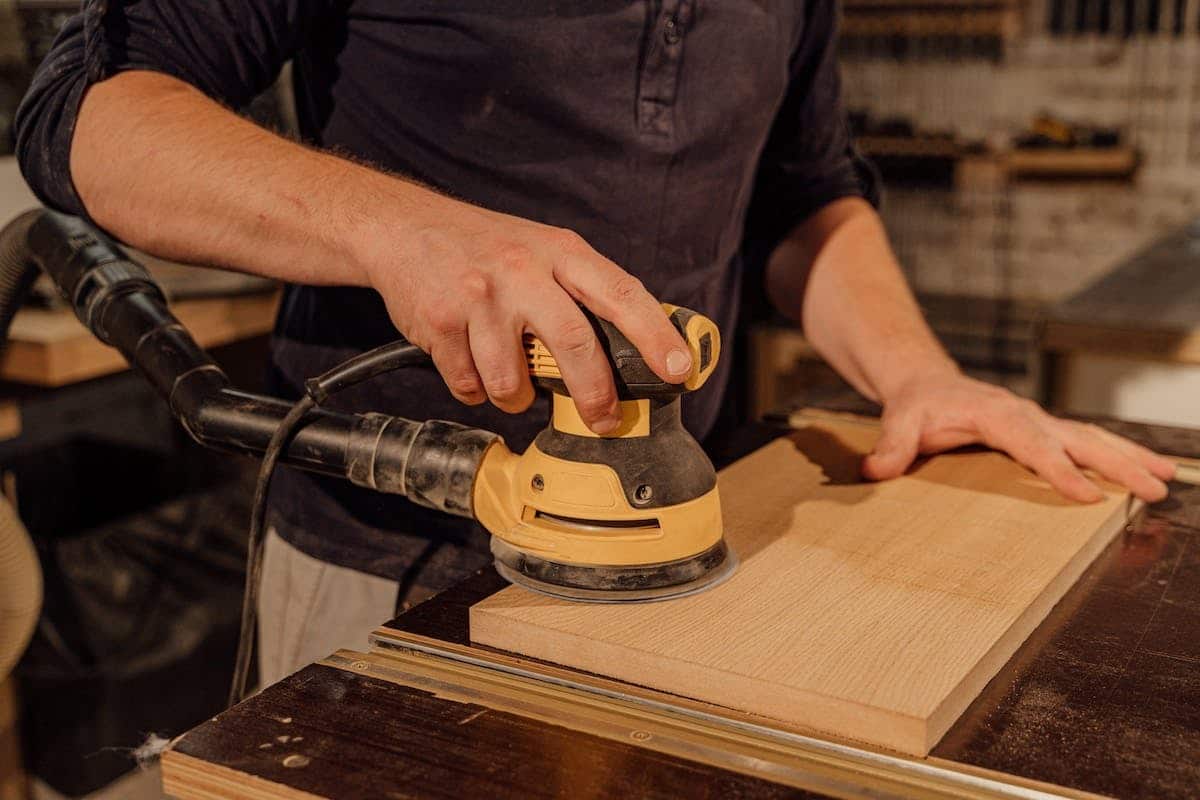
Electric sander: This tool is indispensable for facilitating work and saving time during sanding. There are different types of electric sanders: the vibrating sander, the orbital sander, and the eccentric sander. Choose the one that best suits your needs and ensure it has a speed control feature to adapt it according to the different stages of sanding.
Sanding block: This small rectangular piece with foam is very useful for fine finishes. It allows for easy handling and offers better precision when working on specific or curved areas.
Abrasive paper: The choice of abrasive paper is decisive in the success of your sanding operation. Opt for quality paper with different grains to adjust the intensity as you go. You will generally find pre-cut sheets or rolls that you can cut according to your needs.
Wire brush: If your furniture has a thick layer of old paint or varnish, using a wire brush may be necessary even before starting the actual sanding process. It will help remove coarser residues and thus facilitate the subsequent work.
Vacuum cleaner or shop vacuum: Having a vacuum cleaner on hand is essential to maintain a clean work area and avoid excessive dust accumulation. If you have a shop vacuum, it will be particularly useful for efficiently collecting debris generated by sanding.
Protective goggles and respirator mask: Safety should be your top priority during sanding. Wear protective goggles to shield your eyes from flying particles and a respirator mask to avoid inhaling dust that can be irritating or even harmful.
Remember that each piece of furniture is unique and may require specific tools depending on its size, shape, or initial condition. Don’t hesitate to seek advice from a professional if you have doubts about the appropriate equipment to use.
With these essential tools in hand, you are now ready to approach the sanding process with confidence. Take the necessary time, be meticulous in your work, and you will see your furniture regain all its natural shine.
How to Properly Sand Your Wooden Garden Furniture: The Steps to Follow
In this section dedicated to the steps to follow for properly sanding your wooden garden furniture, we will guide you step by step to achieve an impeccable result. Follow these instructions carefully, and you will have restored furniture ready to welcome your moments of relaxation outdoors.
Prepare the surface: Before starting the sanding, ensure that your furniture is clean and free of all dirt on its surface. Use a soft brush or cloth to remove dust, cobwebs, or any other impurities that could hinder the process.
Protect your surrounding surfaces: Sanding can generate a lot of fine dust that may disperse into the environment. Carefully cover nearby plants, floors, or other sensitive objects with a plastic tarp or protective film to avoid any damage.
Start with coarse grains: To begin the sanding process, use coarse-grit sandpaper (generally between 60 and 80). This step mainly aims to remove the worn top layer of the wood as well as any resistant varnish.
Gradually work towards finer grains: After using coarse sandpaper, progress to finer grains such as 120, then 240, or even up to 400 depending on the desired finish. This will gradually refine the wood surface and eliminate previous sanding marks.
Respect the direction of the grain: When sanding, be sure to always follow the direction of the wood grain. This ensures a uniform finish while avoiding damage to the natural structure of the material.
Use different methods for difficult areas: For corners or more complex areas like chair legs or grooves, use a sanding block that facilitates access to small surfaces without risking damage to the furniture.
Be careful not to press too hard on certain areas: remember to maintain a constant but moderate pressure while sanding to avoid excessively damaging the wood. Also, avoid going over the same spot multiple times to prevent unnecessarily digging into the surface.
Regularly wipe away generated dust: During the process, it is essential to regularly remove accumulated dust with a clean cloth or a vacuum cleaner equipped with a suitable attachment for woodwork.
Finish with a thorough cleaning: Once you have completed all the sanding steps, carefully clean your furniture with a damp cloth to remove any residual dust or debris from the previous process.
By rigorously following these steps, you will be able to bring your outdoor wooden furniture back to life and thus extend its durability while preserving its natural charm.
After Sanding: Essential Maintenance to Preserve Your Wooden Garden Furniture
In this section dedicated to the maintenance of wooden garden furniture after sanding, we emphasize the critical importance of this step to preserve the beauty and durability of your outdoor furnishings.
Once you have performed a meticulous sanding, it is crucial to pay special attention to the post-sanding treatment. This will not only help to remove dust residues but also improve the quality of the finishes applied afterward.
Take the time to carefully dust each surface with a soft cloth or a suitable brush. Be sure not to neglect corners and crevices where fine particles may settle. This preparatory step is essential to ensure optimal adhesion of the products used during the subsequent treatment.
Move on to the crucial step: the application of a protective product specifically designed for outdoor wood. Choose this product wisely based on the specific characteristics of your furniture (type of wood, exposure to the elements…). Also, prioritize those that are environmentally friendly to combine effective protection with sustainable development.
Generously apply this product with a wide brush or a special roller to achieve a uniform layer over the entire treated surface. Also, ensure that it penetrates properly into the wood pores to enhance its resistance against external aggressions. Allow it to dry for the necessary time, following the manufacturer’s instructions, and then proceed with a second coat if recommended.
To further maintain your wooden garden furniture and extend its lifespan, it is essential to use specific products. This will nourish the wood deeply and renew the protection against UV rays and moisture.
Do not underestimate the importance of maintenance after sanding your wooden garden furniture. This essential step guarantees not only the aesthetic beauty of the furniture but also its resistance to weather conditions. By following these simple yet effective tips, you preserve the natural splendor of the wood while extending its durability over time. Take good care of your outdoor furniture so that it remains a true gem through the changing seasons.
The Benefits of Carefully Sanded Wooden Garden Furniture: Discover All Its Natural Charm
In this section dedicated to the advantages of properly sanded wooden garden furniture, we highlight the multiple benefits you can gain from this essential step.
Properly sanded wooden garden furniture has a more aesthetic and attractive appearance. By eliminating imperfections such as knots, rough spots, or stains, sanding reveals the natural beauty of the wood. Your furniture thus gains elegance and integrates harmoniously into your outdoor space.
Proper sanding gives the wood a smooth texture that is pleasant to the touch. Gone are the days of unpleasant splinters when sitting on poorly treated wooden chairs! Thanks to meticulous sanding, you achieve a soft surface that provides optimal comfort during your moments spent in the garden.
Another major advantage of effective sanding is the prolongation of the durability of garden furniture.